The Enzyme Opportunities Behind Three Major Food Trends
Alternative proteins continue to attract significant investment, precision fermentation is gaining commercial momentum, and consumer demand for health-focused products remains central to food and beverage development.
Food and ingredient manufacturers are investing in technologies that can improve product functionality, processing efficiency and nutritional performance.
Alternative proteins continue to attract significant investment, precision fermentation is gaining commercial momentum, and consumer demand for health-focused products remains central to food and beverage development.
Although these areas are not new, they are evolving rapidly. As companies move from early innovation towards scalable, commercially viable products, enzymes can help overcome processing challenges and improve the performance of both ingredients and finished formulations.
1. Investment in alternative proteins continues to grow
Alternative proteins have been an established area of food innovation for many years. What is changing is the scale of investment being made by brands, ingredient suppliers and emerging companies.
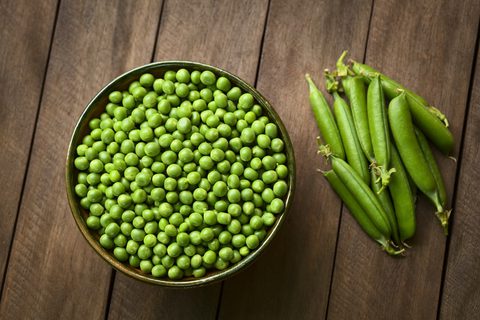
Pea and soy remain important protein sources, while interest is also growing in mycoprotein, algae, fungi and fermentation-derived proteins. This expanding range of raw materials gives manufacturers more options, but it also creates new formulation and processing challenges.
Many alternative proteins can have limitations that affect their use in finished products, including:
- Poor solubility or dispersibility
- High or inconsistent viscosity
- Undesirable flavours
- Difficulties achieving the desired texture
- Limited functionality in certain food matrices
- Variations in digestibility and nutritional performance
Enzyme-assisted protein modification can help manufacturers address these challenges.
Controlled enzymatic hydrolysis changes protein structure and peptide size, allowing developers to tailor the functional properties of an ingredient. Depending on the protein source and application, enzymes can help improve solubility, modify viscosity, influence texture and support flavour development.
Biocatalysts’ PlantPro™ range has been developed to support the modification of plant-derived proteins. These enzyme solutions can help manufacturers improve the processing and sensory characteristics of plant protein ingredients.
The Promod® range provides additional protease options for the controlled hydrolysis of a wide variety of proteins. By screening enzymes with different activities, manufacturers can identify a solution suited to their substrate, process conditions and target product characteristics.
As investment in alternative proteins increases, enzymes can help companies move beyond simply identifying new sources of protein and towards creating ingredients that perform effectively in commercial food applications.
2. Precision fermentation is gaining momentum
Precision fermentation is not a new technology, but it is becoming an increasingly important area of food and ingredient development.
Companies are exploring fermentation as a way to produce proteins, flavours, fats, bioactive ingredients and other functional components. Fungal biomass and other fermentation-derived materials are also attracting interest as potential food and nutrition ingredients.
As these technologies move towards larger-scale production, downstream processing is becoming a major area of focus.
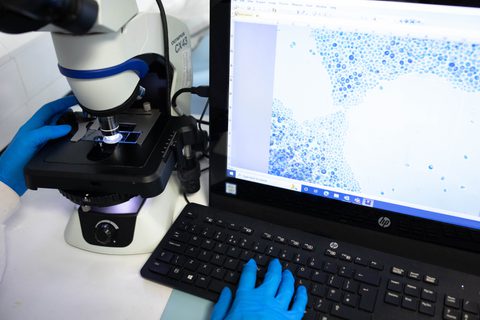
Fermentation can produce a valuable target ingredient, but manufacturers must then recover and refine that material efficiently. Depending on the process, this may involve:
- Cell disruption
- Reduction of process-stream viscosity
- Removal of nucleic acids and cellular material
- Clarification
- Protein recovery
- Protein hydrolysis or functional modification
Enzymes can support several of these downstream-processing stages.
The Promod® range can then be used to modify recovered proteins. Controlled protein hydrolysis may help adjust properties such as solubility, viscosity, flavour, digestibility and overall functionality.
Using enzymes within downstream processing can help manufacturers improve process efficiency while also tailoring the characteristics of the final ingredient.
Biocatalysts can support fermentation businesses from initial enzyme selection through to process optimisation and commercial-scale supply. Where an existing product does not meet the requirements of a novel process, custom enzyme development can provide a solution designed around the customer’s specific substrate and operating conditions.
3. Consumer health and nutrition remain at the forefront
Health and nutrition have been major drivers of food and beverage innovation for several years, and consumer interest in these areas remains strong.
Consumers are increasingly interested in products that support digestive health, healthy ageing, active lifestyles and general wellbeing. They are also paying greater attention to protein quality, nutrient bioavailability and the ingredients used to formulate their food.
This means manufacturers must consider not only how much protein or nutrition a product contains, but also how well those nutrients perform within the formulation and how accessible they are to the consumer.
Enzymes can support this development in several ways. Controlled protein hydrolysis can produce smaller peptides and alter protein structure. This may improve solubility and make protein ingredients easier to incorporate into beverages, supplements and other nutrition-focused products.
It can also help manufacturers develop protein ingredients with functional characteristics suited to applications such as:
- Active and sports nutrition
- Healthy ageing
- Medical nutrition
- Digestive wellness
- High-protein foods and beverages
- Functional food formulations
Biocatalysts’ Promod® range includes proteases suitable for a variety of protein substrates, including plant, dairy, fungal, microbial and animal-derived proteins.

By selecting the right protease and controlling the degree of hydrolysis, manufacturers can develop ingredients with characteristics tailored to their nutritional and formulation objectives.
Enzymes can also contribute to clean-label development. By modifying the properties of an ingredient during processing, enzymes may help manufacturers improve texture, flavour, viscosity or functionality without relying entirely on additional formulation ingredients.
Helping manufacturers turn trends into scalable solutions
Alternative proteins, precision fermentation and consumer health are established areas of innovation, but each is entering a new stage of commercial development.
Greater investment in alternative proteins is increasing demand for ingredients with improved functionality and sensory performance. The rise of precision fermentation is creating new downstream-processing requirements. Continued consumer focus on health and nutrition is encouraging manufacturers to develop products with better digestibility, bioavailability and formulation performance.
By working with us, manufacturers can identify the right activity for their substrate and develop a process that supports both product performance and commercial scalability.
As food and ingredient technologies continue to evolve, enzymes will play an important role in helping companies turn promising ideas into efficient processes and successful products.